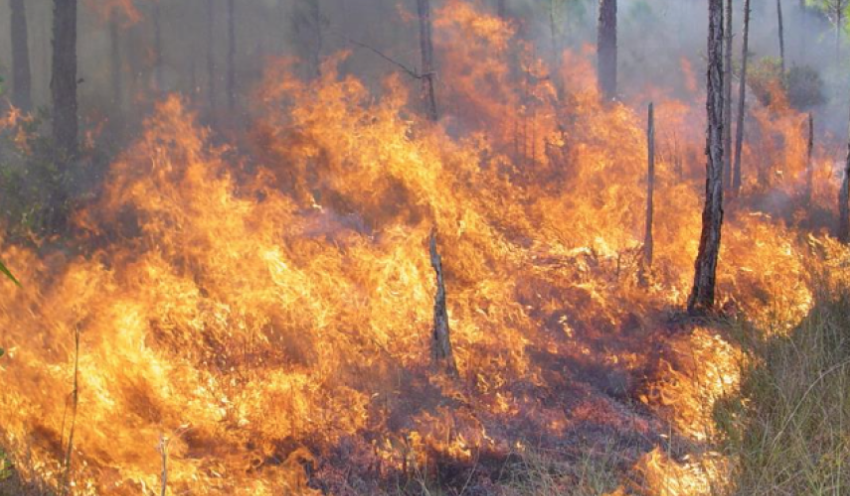

Today, we talk about a big wildfire in Florida, USA. It happens in a special place called Big Cypress National Preserve. This preserve is like a huge swampy forest full of cypress trees, alligators, birds, and many animals. It is very beautiful and important for nature.
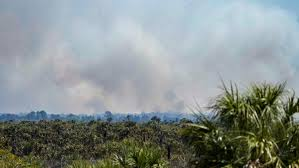
The fire is called the National Fire. It started on February 22, 2026. By February 25 and 26, it had burned almost 25,000 acres. That is a very big area—imagine a square bigger than many cities! Right now, it is 0% contained, which means firefighters have not stopped it yet. It is still growing because the land is very dry.
Why is it so dry? Florida had a cold winter with frost that killed many plants. Those dead plants are now dry grass and leaves—easy to burn. There is also a long drought (no rain for many days). The fire started because of people (human-caused, says the government). Maybe someone was not careful with fire or cigarettes.
The fire is close to a famous road called Alligator Alley. This is part of Interstate 75, a long highway that goes through the swamps from Naples to Fort Lauderdale. It is about 80 miles long. The name Alligator Alley comesfrom the fact that you can see many alligators in the water near the road!
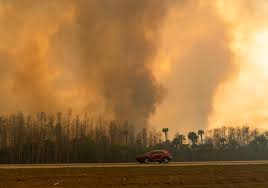
Smoke from the fire makes the air thick and gray. Drivers cannot see well. Sometimes visibility is almost zero. The Florida Highway Patrol (police for roads) watches mile markers 65 to 85 carefully. They closed the road at night on February 25 because the smoke was too bad. They opened it again, but told everyone to slow down, use lights, turn on wipers, and stay careful. No big accidents yet, but it is dangerous. Alternate roads like State Road 29, US 27, and US 41 (Tamiami Trail) are open.
People worry about a place nicknamed Alligator Alcatraz. This is not a prison for alligators! It is a big immigration detention center in the preserve. It opened in July 2025 at an old airport site called Dade-Collier Training and Transition Airport in Ochopee. The government (Florida and federal) built it fast to hold people who come to America without papers. It can hold 2,000 to 5,000 people. Some people call it Alcatraz because Alcatraz was a famous, tough prison island, and this place is in a swamp with alligators around.
But good news: the fire is about 20 miles west of Alligator Alcatraz and burning the other way. Officials say there is no danger to the center right now. They have plans ready—if needed, they can move people fast. They practiced this. Stephanie Hartman from Florida Emergency Management said humidity (a little wet in the air) helps slow the fire a bit.
Firefighters work hard. Teams from the National Park Service, Florida Forest Service, U.S. Wildland Fire Service, and others fight on the ground and from the air (helicopters drop water). Cost so far is about $200,000. They do defensive lines to stop the spread. No houses or people have been hurt yet. No evacuations are needed, but small towns like Ochopee, Copeland, Jerome, and Everglades City watch carefully.
Big Cypress is special. It has over 729,000 acres. Home to the Florida panther (a very rare big cat), black bears, hundreds of birds, alligators, snakes, and fish. The swamp has different parts: wet prairies, pine forests, cypress domes (round groups of tall trees in water), and hardwood hammocks. Fire here is normal in the dry season (winter). Nature uses fire to clean old plants and help new ones grow. But this fire is extra big because of drought and frost.
Smoke might go to Naples, Glades, and Hendry counties soon. Dry weather may last until May 31. Winds change and push the smoke in different ways.
My Thoughts and Analysis. This fire shows how weather changes affect nature. Climate change makes droughts longer and hotter in places like Florida. Cold snaps (arctic blasts) kill plants, then dry them, making big fuel for fire. We see more wildfires worldwide because of this.
Alligator Alcatraz is controversial. Some say it is bad for the environment in the sensitive Everglades (water and animalsare hurt by building). Others say it helps control immigration. The fire near it makes people think about safety in wild places.
Florida wildfires are usually small in winter, but this one exploded fast from 5,000 to 25,000 acres in days. Shows how fast things change with dry fuel.
Tips, Advice, and Future Prediction: Safety tips if you drive there:
- If there is smoke, slow to 30-40 mph or less.
- Use low beams (high beams make worse glare in smoke).
- Turn on headlights, wipers, and defroster.
- Keepa distance from other cars.
- No phone—watch the road!
- If visibility is zero, pull over safely if possible.
- Listen to the radio or phone alerts from the Florida Highway Patrol.
For everyone: Never start a fire in dry areas. Put out campfires completely. No throwing cigarettes. Report smoke or fire fast (call 911 or the forest service).
Future prediction: With climate change, Florida may have more big fires in dry winters. Humidity helped a little now, but if there is no rain, the fir,e could grow more or new fires could start. Scientists sayto protect wetlands and reduce pollution to help the weather. Maybe more prescribed burns (safe small fires by experts) to clean dry plants before big fires.
Big Cypress is tough—alligators, panthers, and birds have lived with fire for thousands of years. But humans must be careful.